.png)
The Body’s Stress Response: Understanding Fight, Flight, and Freeze

It is normal for everyone to experience stress. Being involved in a hard discussion, experiencing a sudden threat, delivering a speech in front of others, having job-related pressure, or facing danger in any other way can make your body react even before you have time to understand what is going on. For example, you might notice your heart beating fast, your muscles tensing, your breathing changing, and getting the urge to do something suddenly.
Such reactions occur in connection with the stress response of the body, which refers to the physiological process helping you cope with the situations perceived by your nervous system as challenging. Fight, flight, and freeze reactions are among the typical forms this response can take.
Learning more about the way such reactions work will enable you to understand your stress signals better.
What is the Body’s Stress Response?
The body's stress response refers to the various physiological and psychological reactions that can happen when the brain identifies a threat, challenge, or high demands being made on you. These changes involve the nervous system as well as other body systems for preparation.
When the brain sees a certain situation as threatening, the body can change its state to be more alert. Your heart rate increases, breathing increases, muscles are tensed, and concentration is on the issue at hand.
This response happens automatically and not as a result of your decision to activate it.
It occurs for the body to be ready to cope with the threat posed by the environment. Although this response is helpful during stressful situations where you are in danger, it can also occur during emotional and psychological stress.
Your body may have strong reactions before delivering a speech, during a debate, during deadlines, or when being criticized.
Understanding the Fight Response
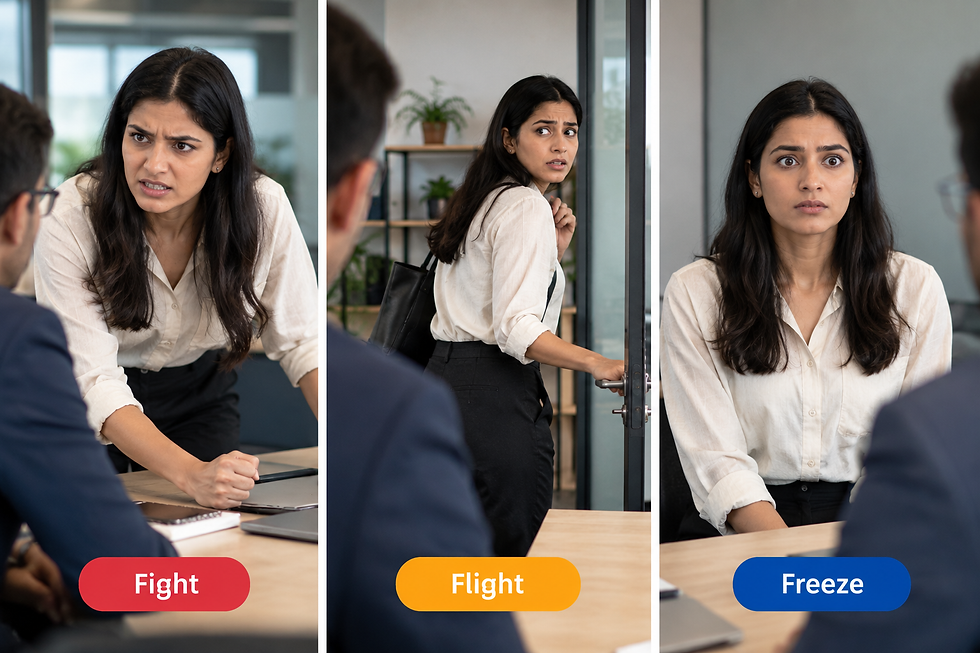
The fight response is the response that gets you ready to face the danger that your nervous system perceives. Rather than desiring to run away from the danger, you will feel the desire to resist, challenge, defend yourself, or control the situation.
Physical indications can be in the form of a higher heartbeat, muscle tension, rapid breathing, sweating, and heightened awareness. Emotional indications include irritation, anger, frustration, and urgency. The occurrence of the fight response does not always lead to aggressive behavior. All you can do is become more defensive or willing to resist.
For example, when stressed during a heated discussion, you may discover that your voice becomes firmer, you get tense, and you have an urgent need to convince the other party of your point of view.
Understanding the Flight Response
In this case, one prepares oneself for flight in case of danger. In such situations, your body may make you feel a bit energetic to enable you to run away or avoid a certain stressful situation.
Common symptoms include restlessness, shallow breathing, rapid heart rate, muscle tightness, and inability to sit calmly. One feels compelled to leave a stressful place, such as avoiding a disagreeable conversation.
Flight can manifest in a person in many other ways, including avoidance reactions. In this instance, you are likely to engage yourself in other non-stressful activities as opposed to dealing with the stressor itself.
Avoidance of a stressful situation does not necessarily mean a negative response all the time. There are some times when avoidance is actually a reasonable response, especially in the face of danger.
Understanding the Freeze Response
Unlike the other stress responses, the freeze response feels very different from the fight/flight response. In the freeze response, you do not attempt to face up to the problem or flee from it.
In this case, the individual will feel a kind of mental blankness, indecision, numbness, stillness, or the feeling of being overwhelmed by something. The individual may be aware that he needs to respond to the situation, but he cannot decide how to react.
For instance, one person can ask an unexpected question when having a difficult conversation, and the brain will suddenly go blank. Another person, when under immense pressure, may suddenly stop speaking and become very silent.
Freezing is not always a deliberate decision of the person to remain immobile, but the automatic reaction of the body. Understanding the difference between these reactions is useful as people tend to punish themselves for freezing during stressful conversations.
How Fight, Flight, and Freeze Affect the Body
There could be many similar bodily reactions during the fight, flight, and freeze response. This includes the activation of the body to prepare for action. Some of the bodily changes include:
An increase in the heart rate
Fast or shallow breathing
Muscle tension
Increased sweating
Alertness
Restlessness
Concentration problems
Strong need to do something
The body's reaction not only impacts your bodily functioning but also how you feel and behave. It makes it more difficult to focus, communicate, and think rationally when your body becomes too activated by your emotions.
The connection between the nervous system and stress means that the body can give clues to the state of mind. Sometimes, your body will give signs of your being overwhelmed before you realize the causes of your stress.
Why Stress Responses Can Happen Without Physical Danger
One crucial aspect of the body's reaction to stress is the ability of the nervous system to react to perceived threats and not necessarily to the actual physical danger. The modern-day stressors include work-related pressure, financial worries, relationship conflicts, public speaking, social rejection, major life changes, or hard conversations. There is no direct physical threat, but the stressful reaction remains strong.
As an example, right before your significant presentation, you may experience a rapid heartbeat and sweating. When engaging in a difficult conversation, you may have an impulse to fight or to flee from the situation. In case of receiving too much information, it may become hard for you to think rationally.
It does not mean that this reaction is illusory and that you should ignore it. It is just the fact that the protective mechanisms of your body are able to respond differently.
How to Recognize Your Own Stress Response
If you are able to figure out your personal stress indicators, then it will be easier for you to comprehend what happens when you are activated. To begin with, pay attention to physical symptoms. Is your heart racing? Are your shoulders tense? Do you feel restless, or, on the contrary, do you become unusually motionless?
In addition, pay attention to emotional and cognitive responses. Anger, anxiety, frustration, disconnection, or inability to focus are just some of the possible emotional manifestations of your stress response.
Besides, there is always an impulse that you want to react to your stress response in one of these ways: to confront, to escape, or to withdraw. Keep in mind that everyone experiences the above-mentioned phenomena slightly differently. You might experience these kinds of responses in your own unique ways.
What To Do If You Notice You Are In The Stress Response
If you notice that your stress response is activated, a short pause will allow you to react differently if circumstances allow it. For example, try focusing on your breathing and feeling your inhalations and exhalations. It is also possible to ground yourself by looking at what is around you and listening.
If it is reasonable and safe, then take a break from a stressful situation for a while. Allow yourself the chance to calm down before going into a hard conversation or making a big decision. It is also useful to understand why this happened: your organism reacts to a real or imagined threat or a great demand.
Professional help may be necessary if the stress reactions are constant, greatly affect your life, and are hard to cope with. It is useful to understand how stress works, but this doesn't replace individual help in any case.
Conclusion
Your body's reaction to stress can be a reflexive process through which you can get ready to react to the situation you perceive as dangerous or challenging. Fight may make you feel like facing the threat, flight like running away from it, and freeze – like being immobilized and helpless in this situation. All of these responses cannot be seen as signs of a weak character. These reactions can be the responses of your body and nervous system to some perceived threat, stressor, or challenge.
By recognizing changes in your pulse, respiration, muscle tone, emotional state, thinking, and actions, you can become more conscious of how you react to stress. This knowledge will allow you to stop and analyze the situation and respond to it more deliberately when it is possible.
Overall, studying fight, flight, and freeze responses is studying the way you react to stress on a physical level. The more you know about your own stress responses, the easier it becomes to notice them without blaming yourself for that.
Contact Us
Contact us for a free wellbeing consultation! Our experienced psychologists and wellness experts are here to support your mental and emotional health needs. Start your journey to a healthier mind and a happier life today!



Comments