.png)
Assertiveness Training for Reducing Interpersonal Stress

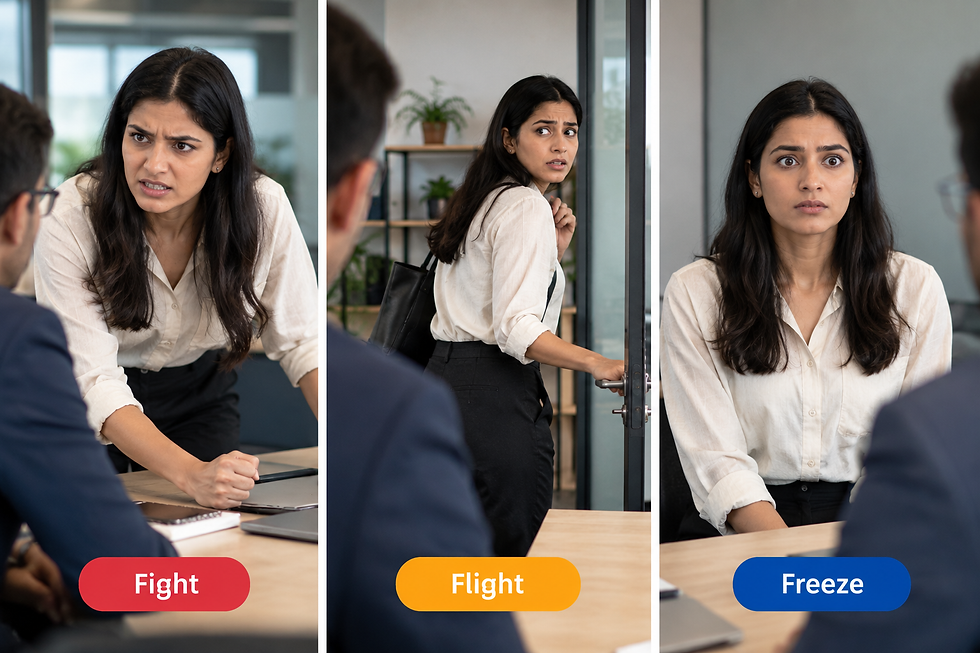
Interpersonal stress is among the most common causes of emotional stress in the workplace and daily life. Not all conflicts are caused by differences in interests; on the contrary, many conflicts occur due to the inability of people to express themselves effectively. On the one hand, some people remain silent to avoid arguments, while others use such an aggressive style of communication that leads to tension in relations. As a result, misunderstandings accumulate, negative emotions increase, and stress occurs regularly.
Assertiveness is a skill of effective communication that allows a person to communicate confidently, but at the same time, respect the rights of other people. Assertiveness is not aggressiveness, loudness, or the inability to feel anything. Assertiveness implies the development of specific communication techniques that minimize unnecessary conflicts and contribute to maintaining harmonious relationships.

Assertiveness is a Communicative Behavior and Not an Inherent Trait of a Person
A lot of people consider assertiveness a trait people are born with. However, for psychologists, it is a behavior that can be learned. Naturally non-confrontational people become more confident once they master particular communication skills, just like confrontational people can learn how to be balanced when communicating.
Assertiveness is located between two unproductive forms of communication. People who communicate passively often repress their own desires to avoid conflict. Those who communicate aggressively do not care about other people’s feelings because of their focus on meeting their own needs. Being assertive, one understands that both viewpoints have equal value and must be taken into account.
Why Not Addressing Hard Conversations Usually Leads to More Stress
Though avoidance gives temporary relief, it usually does not solve interpersonal issues. The fact that the problem is not discussed keeps causing misunderstanding, uncertainty regarding expectations, and gradual accumulation of frustration. The little problem that could be solved by a proper discussion turns into a bigger problem due to constant postponement of addressing it.
Unresolved discussions also take up psychological space. People tend to think about those discussions that did not go well or about upcoming discussions that they are avoiding. This mental rehearsal adds to stress, because psychologically the problem is treated as unsolved and unfinished.
Boundaries Make for Stronger Relationships, Not Weaker Ones
People avoid setting boundaries due to the possibility of causing disappointment to others. The fear is justified, considering the value of teamwork and flexibility in working environments; however, not having proper boundaries leads to bigger issues than having respectful ones. Without knowing what is expected of you, you may inadvertently ask too much of someone in terms of their time, energy, and emotional availability.
Clear boundaries make the lives of all people better. Politely saying no to work once you are unable to do more, asking for undisturbed time to work on something, and stating your limitations are better options than causing frustration that will eventually appear. Other people may disagree with your decisions, but they would understand the communication better than passive resentment.
Assertive Language Helps Avoid Being Defensive
The language that people use during difficult dialogues affects how the listener reacts. Assertiveness training involves talking about things using observable facts and experiences and asking for something very clearly without using blaming language or making assumptions. Such an approach decreases the chances that the other party will get defensive right away.
Thus, it is much better to talk about what happens to you due to someone interrupting meetings constantly rather than say that this person is being disrespectful. The former way addresses the actions that may be changed; the latter is judgmental.
Another important element of assertive talking is doing it with confidence and at the same time staying open to discussion. Talking with assertiveness does not mean winning an argument but finding common understanding.
Emotional Regulation Enhances Assertiveness
Assertiveness requires not only good communication skills but also emotional regulation. Intense emotions like anger, frustration, and anxiety may affect our reasoning and make it hard for us to communicate our issues. A person who is experiencing these emotions may stay silent even when they have something important to say or may react impulsively and cause conflict escalation.
Learning to take some time before reacting will allow us to cool off enough to engage in rational communication. Methods like deep breathing, leaving the place of stress temporarily, and identifying the goal of the discussion can be used to remain calm in the heat of the moment. Emotional regulation is not about suppressing difficult emotions; it is about avoiding their influence on the discussion.
Another benefit of developing this skill is enhanced self-confidence. When we are sure that we will be able to remain calm even in a disagreement, we are less afraid of having the conversation.
Assertiveness Promotes Wellbeing in the Workplace
Workplace interactions require constant exchange of information among colleagues, bosses, customers, and even teams. Inability to share their worries, expectations, and requests can result in misunderstandings and ultimately have a detrimental effect on the efficiency and morale of workers. An assertive approach to communication helps maintain a healthier atmosphere by discussing any possible problems before they start influencing cooperation.
Assertive workers are likely to be better at negotiating work duties, seeking clarifications, and sharing ideas when discussing something with a group of people. However, this does not mean that they face fewer problems than other workers; they confront them earlier and more efficiently, thus avoiding the long-lasting tension.
It is beneficial for the company to encourage assertiveness, as teams that manage to discuss their concerns, obligations, and expectations solve their problems faster.
Assertiveness Needs Practice, Not Perfection
Most people assume that once they learn certain skills, their communication will instantly start improving. The truth is that assertiveness requires time and practice because it is acquired gradually while interacting in real-life situations. The process of practicing can begin by starting off with less stressful encounters before moving on to tougher ones.
It is quite normal for an individual to experience unease as a result of adopting new communication skills that they did not previously possess. A person who always tried to avoid arguments by keeping quiet will definitely be nervous at first about speaking out and voicing their opinion. People who are aggressive communicators will have some time to get used to being polite and more collaborative in their speech.
With each successful attempt at being more assertive, people realize that such behavior yields positive results.
Conclusion
Through assertiveness training, interpersonal stress is alleviated through the development of respectful and open forms of communication. In lieu of either avoiding confrontation or being aggressive in such situations, an assertive person clearly states their requirements but at the same time understands the points of view of other people. Such a balanced perspective helps to improve mutual understanding and avoid conflicts.
Interpersonal stress cannot be eliminated because there will always be some differences in opinions and expectations in any relationship. What may be changed, however, is how people will deal with those differences. Through assertiveness training, one may learn how to conduct a conversation healthily.
Contact Us
Contact us for a free wellbeing consultation! Our experienced psychologists and wellness experts are here to support your mental and emotional health needs. Start your journey to a healthier mind and a happier life today!


Comments