.png)
Impact of Screen Time on Sleep Quality: What You Need to Know

Introduction
We live in a time where technology plays a central role in our daily lives. From browsing social media at night to watching TV shows, screen time is an essential part of our daily lives. Research has found that an excessive amount of screen time, especially before going to bed, affects sleep quality. A recent study has found that one hour of screen time before going to bed can cause an increase in insomnia by 59% and reduce sleep time by 24 minutes.
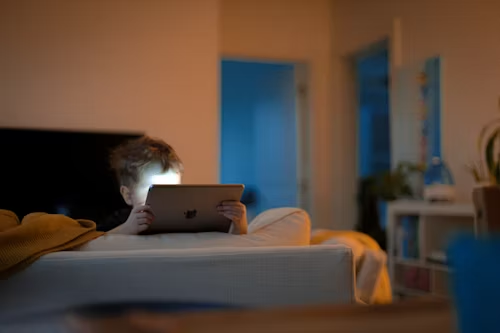
Though technology has provided us with many conveniences, it is essential to understand how it affects our sleep quality. In this blog, we shall discuss how screen time affects sleep quality.
Understanding Sleep Quality
Sleep quality is not just the number of hours spent in bed but also the number of minutes taken to go to sleep, the depth of the sleep, the number of times the person wakes up in the night, and the level of refreshment in the morning.
Sleep plays a crucial role in maintaining physical health, cognitive performance, and emotional balance. It is necessary for the development of the brain and the immune system. The human body has an internal clock that is referred to as the circadian rhythm. It controls the sleep and wake patterns of the human body.
The Emergence of Screen Time in Modern Times
In recent years, screen time has increased significantly. This is largely because of smartphones, laptops, and online streaming. People are using screens until very late at night.
The emergence of screen time has changed the way people sleep. In earlier times, people used to disengage themselves from activities until they went to bed completely. This is not the case anymore. Screen time is directly related to sleep.
How Screen Time Affects Sleep Quality
Screen time has a considerable effect on sleep quality. Excessive screen time in the evenings is one of the most detrimental factors that can impair sleep quality. One of the reasons is that excessive screen time can reduce melatonin levels in the body. Melatonin is a hormone that regulates the body’s sleep cycle. Reducing this hormone can disrupt sleep patterns and confuse the internal clock. It can delay sleep and cause a person to sleep late at night.
Another reason is that screen time can be very engaging and can keep a person awake. For instance, if a person is watching a video or playing a game, their brain is active and cannot sleep. In this case, a person can sleep late and wake up in the morning feeling tired and unfocused. In addition, screen time can cause a person to wake up frequently at night. It can impair sleep quality and reduce sleep duration.
Psychological and Physical Consequences
The psychological and physical consequences of a lack of quality sleep due to too much screen time are significant. The psychological consequences include increased stress levels, anxiety, and difficulty concentrating. Similarly, the lack of quality sleep also affects a person's memory and decision-making ability.
The physical consequences of lack of quality sleep include fatigue, headaches, and a weak immune system. In the future, it may also increase the chances of acquiring health problems such as obesity and heart conditions.
Who Is Most Affected?
Excessive screen time affects everyone, but some people are more vulnerable to it than others.
Children and teenagers are more vulnerable to the effects of screen time since they are highly sensitive to light, which affects the quality of their sleep. Similarly, the lack of quality sleep in children and teenagers also affects their academic and emotional stability.
Similarly, adults are also vulnerable to the consequences of a lack of quality sleep since they spend most of their time working from home or staying up late at night to watch their screens.
Signs Your Screen Time Is Hurting Your Sleep
You may not always be aware of the fact that your screen time is affecting your sleep. Some of the signs include:
You find it hard to fall asleep
You wake up frequently in the night
You feel tired despite having slept for several hours
You always use your phone or television before bedtime
You feel tired in the morning or lack focus during the day
Practical Tips to Reduce Screen Time Before Bed
To reduce screen time before going to bed, one can follow certain habits that can be helpful in developing a new lifestyle that can improve sleep quality. A good practice is to impose a screen curfew by switching off all devices at least 30 to 60 minutes before sleep.
Reducing screen brightness or using a night mode can also be helpful in limiting exposure to screen lights; however, this is not a substitute for limiting screen time. Developing a pre-sleep routine can be helpful in making it easy to sleep without relying on screen time. For example, one can read a book or practice relaxation techniques.
Another good practice is to keep all devices away from the bedroom; this can be helpful in limiting screen time and making it easy to sleep. Establishing a routine for working and entertainment can be helpful in ensuring that one is not using screens at late hours; this can improve sleep quality.
Conclusion
The role of screen time in relation to sleep quality is an important factor that is becoming increasingly hard to ignore in today’s technologically advanced world. Although screens have come to play a crucial role in facilitating communication, work, and leisure activities, overuse of screens, especially in relation to bedtime activities, can negatively impact sleep. This can cause sleep deprivation and also impact mental clarity and physical health.
The good news is that making improvements to sleep does not necessarily call for drastic changes. Making minor changes that can help improve sleep can make a big difference. This can include avoiding screens at night, creating a relaxing pre-sleep routine, and setting boundaries around screen time. This can help restore a person’s natural rhythm and allow for better sleep.
Making improvements to sleep is about being aware of how screen time can impact sleep. This can help create
Contact Us
Contact us for a free wellbeing consultation! Our experienced psychologists and wellness experts are here to support your mental and emotional health needs. Start your journey to a healthier mind and a happier life today!


Comments